Boujad Vloerkleden – Handgeknoopte Berbertapijten in Warme Kleuren uit Marokko

Raadpleeg de beschrijving voor verdere inzichten

Moroccan Boujad Rugs - OunizZ

Boujad Vloerkleden – Handgeknoopte Berbertapijten in Warme Kleuren uit Marokko(Klik hier)

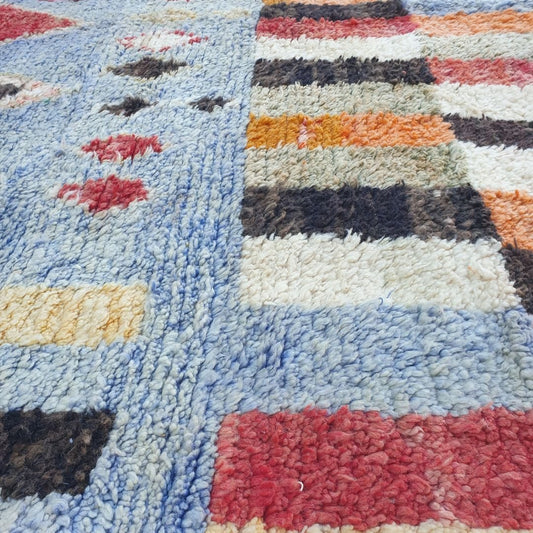
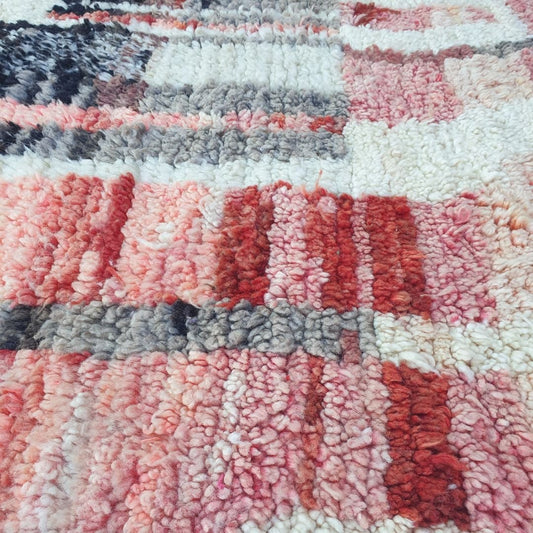
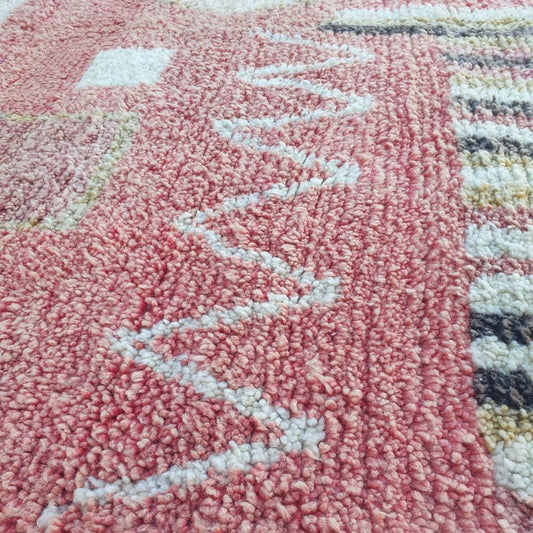
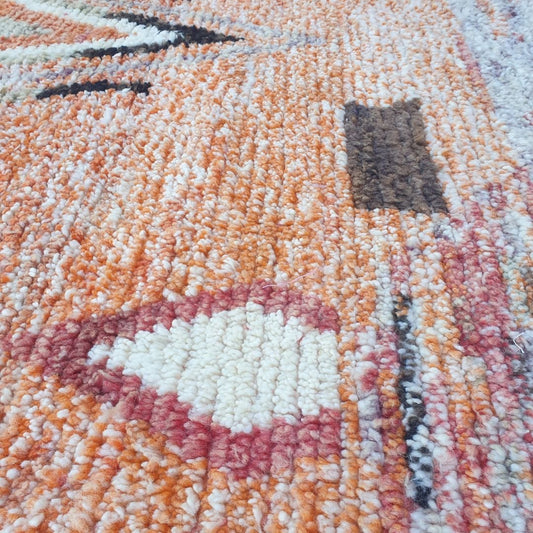
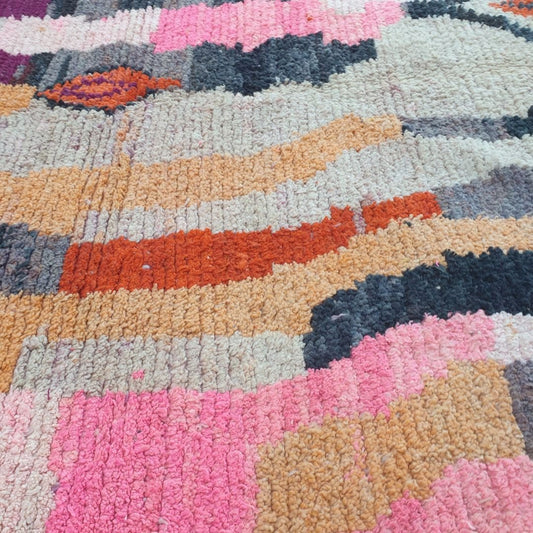
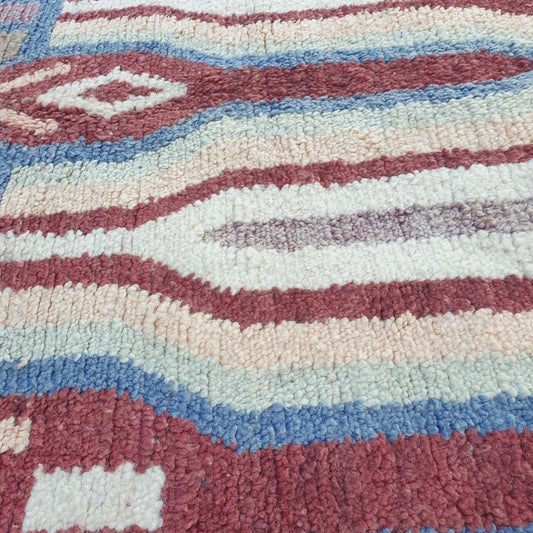
Welkom in OunizZ's collectie Boujad-vloerkleden – de wildste, warmste en meest expressieve Berbertapijten uit Marokko. Met de hand geknoopt door Berbervrouwen in de Boujad-regio van het Midden-Atlasgebergte, onderscheiden deze vloerkleden zich door hun spontane, vrije patronen, warme kleuren in rood, roze, terracotta en oranje, en de ongeëvenaarde creatieve vrijheid die elk stuk doordringt. Geen enkel Boujad-vloerkleed lijkt op een ander – hier dicteert geen sjabloon de handen van de weefster. Bij OunizZ leveren wij rechtstreeks van de Berberweefsters in Marokko naar uw deur.

Wat is een Boujad-vloerkleed?

Boujad-tapijten komen uit de stad Boujad in de provincie Khouribga, in het Midden-Atlas – een regio die al decennialang het centrum is van een bijzonder levendige en expressieve weeftraditie. De Berberweefsters zijn hier niet gebonden aan strikte patronen of kleurpaletten; zij weven vanuit innerlijke beelden, symbolen en de inspiratie van het moment. Het resultaat zijn vloerkleden die aan abstracte kunst doen denken – een combinatie van oeroude Berbersymbolen, vervormd en bevrijd tot iets totaal origineels. Elk kleed is de unieke uitdrukking van de individuele creativiteit van de weefster.

Wat maakt Boujad-vloerkleden uniek?

Het warmste kleurenpalet: Boujad-vloerkleden kenmerken zich door hun warme, gloeiende tinten – diep rood, roze, terracotta, bordeaux en oranje. De kleuren ontstaan uit natuurlijke plantaardige kleurstoffen, en de natuurlijke variatie geeft elk kleed zijn eigen kleur-signatuur.
Absolute creatieve vrijheid: De weefsters breken met conventies. Berbersymbolen worden vervormd tot abstracte composities, patronen zijn spontaan en asymmetrisch – wat het vloerkleed een levendige, artistieke uitstraling geeft.
Natuurwol met ziel: 100% natuurlijke schapenwol, handgesponnen en geverfd in de Atlasbergen. De dikte varieert van nature, wat het kleed een rijkelijk getextureerd, tactiel oppervlak geeft.
Elk stuk uniek: U vindt nooit twee identieke Boujad-vloerkleden. De variatie is geen fout – het is de essentie zelf.

Boujad vs. Beni Ouarain – wat is het verschil?

Waar Beni Ouarain het minimalistische, neutrale vloerkleed is met zijn ivoren achtergrond en zwarte geometrische ruiten, is Boujad zijn expressieve, kleurrijke tegenhanger. Beni Ouarain fluistert – Boujad spreekt luid. Beide zijn met de hand geknoopte Berbervloerkleden van natuurwol, maar Boujad is de keuze voor wie een stuk wil met persoonlijkheid, warmte en artistieke durf. Boujad is de "rock & roll" van de Berberfamilie – en dat is precies waarom het wereldwijd geliefd is bij interieurontwerpers en designliefhebbers.

Zo stylt u uw Boujad-vloerkleed

Bohemian en eclectisch: Het Boujad-vloerkleed is het natuurlijke middelpunt van een boho-inrichting. Combineer het met vintage meubels, veel planten, natuurmaterialen en warme texturen.
Scandinavisch met karakter: Gebruik een Boujad-vloerkleed om de strakke, Noordse inrichting te doorbreken met een vleugje warmte en karakter. De warme rode en roze tinten spelen prachtig tegen het neutrale.
Urban en loft: In een ruimte met beton, baksteen en ruwe materialen is het Boujad-vloerkleed het warme, menselijke element dat de ziel aan de ruimte geeft.
Als wanddecoratie: Hang uw Boujad-vloerkleed aan de muur als kunstwerk – veel Franse en Scandinavische designers gebruiken deze vloerkleden als statement-wandstuk.

Alle Marokkaanse vloerkleden bekijken

De geschiedenis van het Boujad-vloerkleed

Boujad-tapijten werden oorspronkelijk geweven door Berberstammen in en rond de stad Boujad in de Marokkaanse provincie Khouribga. Vanaf de jaren 1930, toen de schapenhouderij in de regio afnam ten gunste van de landbouw en wol schaarser werd, begonnen de Berberweefsters gerecyclede textielen en diverse materialen in de tapijten te verwerken – een creatieve noodzaak die leidde tot de kaleidoscopische, onvoorspelbare kleur- en materiaalcombinaties waarvoor Boujad vandaag bekend staat.

Waarom OunizZ?

Rechtstreeks van de weefsters: Geen tussenpersonen – wij werken direct samen met de Berberweefsters voor eerlijke beloning en behoud van het ambacht.
Zorgvuldig gecureerd: Wij selecteren elk Boujad-vloerkleed persoonlijk voor de beste kwaliteit, de mooiste kleuren en het meest authentieke karakter.
Verzendklaar: Groot aanbod direct beschikbaar – geen wachttijd.
Gratis verzending & 15 dagen retour: Veilig winkelen zonder risico.

Wat onze klanten zeggen

"Het Boujad-vloerkleed is het hart van mijn woonkamer – als een levend schilderij op de vloer." – Marieke H., Amsterdam
"De kleuren zijn in het echt nog levendiger. Een stuk dat ik generaties lang wil bewaren." – Stefan T., Rotterdam
"De beste aankoop die ik ooit voor mijn huis heb gedaan. Uniek, warm en vol ziel." – Liesbeth N., Utrecht

Onderhoudsgids voor Boujad-vloerkleden

Wekelijks stofzuigen: Zachte zuigmond zonder roterende borstel. In poolrichting stofzuigen.
Vlekken: Direct deppen met vochtige doek en milde zeep – nooit wrijven.
Halfjaarlijkse rotatie: 180° draaien voor gelijkmatige slijtage.
Professionele reiniging: Aanbevolen elke 2–3 jaar. Nooit chemische reinigingsmiddelen gebruiken – ze kunnen de natuurlijke kleurstoffen aantasten.
Opbergen: Altijd oprollen (nooit vouwen) in een ademende hoes op een droge plek.

Veelgestelde vragen over Boujad-vloerkleden

Zijn alle Boujad-vloerkleden vintage? Veel Boujad-vloerkleden worden als vintage verkocht, maar wij bieden zowel nieuwe als vintage stukken aan. Beide zijn met de hand geknoopt in de traditionele Boujad-stijl met natuurlijke materialen.
Zijn de kleuren duurzaam? Ja – natuurlijke plantaardige kleurstoffen zijn extreem langdurig en vervagen prachtig tot een begeerde vintage-patina.
Zijn ze geschikt voor gezinnen met kinderen? Ja – natuurwol is hypoallergeen, zacht en bestand tegen dagelijks gebruik.
Kan ik een specifieke maat bestellen? Neem contact op – wij helpen u bij maatwerkafmetingen.

Ontdek verwante collecties

Beni Ouarain-vloerkleden: Minimalistisch, ivoor en geometrisch – het neutrale tegenhanger van Boujad.
Azilal-vloerkleden: Witte achtergrond met kleurrijke abstracte motieven.
Vintage vloerkleden: Unieke stukken met ziel en patina.
Poefs & vloerkussens: Bijpassende Marokkaanse accessoires.

Gratis verzending | 15 dagen retour | Rechtstreeks van de weefsters

Lees klantbeoordelingen

Verzending & retourneren

Verzending is gratis en retourneren binnen 15 dagen.

Levertijden (na verzending):

  • VS: 3-5 werkdagen (Express)
  • VK en Europa: 2-4 werkdagen (Express)
  • Australië/Canada/NZ: 5-7 werkdagen (Express)

🔍 Opmerking: Dit zijn schattingen: er kunnen incidentele douanevertragingen optreden. Voor volledige details, zie onze Verzendbeleid & Retourbeleid.

Over OunizZ

OunizZ | Brand Story
Although OunizZ was launched in Marrakech at the end of 2019, our story goes back millennia to when the first Berber rugs were created in the 7th century. Drawing on the romance of history, traditional craftsmanship, and a commitment to creating an equitable future for the women who weave Moroccan rugs, OunizZ was created to share the story of Morocco with the world.
With a focus on empowerment, sustainability, and heritage, we’re committed to stocking ethically-made fair trade rugs woven from cruelty-free sheep’s wool. In addition, our highly-skilled weavers have over four decades of experience in handwoven textiles, representing ancient wisdom passed down by generations of powerful women.
OunizZ is a story of love—for Morocco, her traditions, and her people—written by our founders for the country they hold dear. Each of our rugs is custom-created to tell a unique story about our history, heritage, and land. This is ours.
 
Celebrate Morrocco’s Rich History
OunizZ founders, Sonia and Oussama, share a deep love for beauty and nature, both of which are abundant in Morocco. From snow-capped mountains and untouched deserts, to pristine beaches and ephemeral wetlands, OunizZ is on a mission to share the country’s hidden gems through exceptionally crafted Moroccan rugs, Beni Ourain rugs, and Boujaad rugs.
Sonia was working in the hospitality industry when the pandemic swept the world. The thousands of travelers who journeyed to Morocco each year were unable to buy the one-of-a-kind handmade items that enriched the local economy, while weavers (some of them Sonia’s family members) were unable to sell their textiles and put food on their tables.
When Sonia lost her hospitality job, she realized she could uplift hundreds of women, returning their financial independence and ability to practice the craft they had honed over decades. She and her husband Oussama founded OunizZ with the vision of transforming the industry and exporting Moroccan rugs to the world and, within a year, the company grew into the largest exporter of rugs in the country.
 
Bringing Transparency to the Moroccan Textile Industry
While Moroccan rugs have grown in demand over the past few decades, the art form has been under threat. This is because the overwhelming majority of companies selling Moroccan rugs online are not the makers—instead, they are intermediaries who buy rugs at low prices.
Moroccan rugs are traditionally made in rural areas with little access to education and employment. Many of these weavers do not know the market value of the rugs they create. As a result, the women who create Moroccan rugs become invisible in the industry, seldom benefitting from their sales and rarely making enough to sustain their families.
At OunizZ, we don’t—and never will—source rugs through intermediaries. Instead, we work directly with weavers to ensure they are paid fairly. Our Moroccan rugs, Beni Ourain rugs, and Boujaad rugs are custom-made for OunizZ, and crafted in our weavers' own homes, where they work with their mothers, sisters, and daughters. This empowers them to pass on generational wisdom while working at their own rhythm and caring for their families and communities.
 
Welcome the Spirit of Morocco to Your Home
Beyond our commitment to creating an equitable industry that champions economic security and uplifts the custodians of the tradition, we believe that Moroccan rugs are an ode to the country’s rich history. We see it as our duty to protect and share it with the world.
Our Moroccan rugs are available in countless sizes, colors, and patterns, each informed by the areas in which they are woven. From the thick shag rugs created in colder regions to the flatweave rugs originally crafted by nomadic tribes, each Moroccan rug tells a unique story about geography, heritage, and the weavers’ artistic expression.
Whether you want to make a bold statement with a bright Moroccan rug or complement your space with a handwoven neutral rug, shop the OunizZ range of ethically-made fair trade Boujaad rugs, Beni Mrirt rugs, Beni Ouarian rugs, Azilal rugs, and vintage rugs for long-lasting works of art that elevate any space.

Zorginstructies:

Maintaining the Beauty of Your Authentic  Moroccan Rug: Effective Cleaning Tips

Moroccan rugs are renowned for their durability and exquisite craftsmanship, but proper maintenance is key to preserving their beauty and longevity. This article provides comprehensive guidance on how to clean Moroccan rugs.

Vacuuming Your Moroccan Rug

  1. Frequency and Technique: Frequent vacuuming is crucial, ideally without a beater bar or rotating brush. Such attachments can cause fuzzing, fraying, and even damage to the rug fibers. Instead, use a suction-only vacuum cleaner, which is more gentle on the rug’s structure.
  2. Vacuuming Wool Rugs: For wool Moroccan rugs, use a vacuum without a beater bar no more than four times a month. Wool fibers are delicate and can shed easily under harsh treatment.
  3. Gentle Approach: Vacuum slowly, steadily, and thoroughly. Ensure the vacuum has good suction to effectively remove deep-down dirt without damaging the wool.

Spot Cleaning Tips

  1. Immediate Action for Spills: Address spills quickly by absorbing the moisture with baking soda. Vacuum up the baking soda after 20 seconds and repeat until it no longer absorbs liquid.
  2. Handling Stains: For stains, blot with clean, cold water. A mixture of vinegar and water can also be effective. Avoid rubbing as it can spread the stain or damage the fibers.

Using Water for Cleaning

  1. Hand Washing Caution: While Moroccan rugs can be hand washed with cold water and laundry soap, there is a caveat. We always recommend taking your rug to a professional cleaner, especially for intricate or brightly colored designs. Professional cleaners have the expertise to handle the rugs without causing color bleeding or other damage.
  2. Rinsing and Drying: If you choose to wash the rug yourself, rinse it thoroughly, preferably with a garden hose. After washing, it's essential to dry the rug completely in the sun. Ensure that it's no longer wet or humid before placing it back on the floor to prevent mold and mildew.
  3. Post-Wash Care: Once the rug is dry, brush it with a plastic hand brush or a clean BBQ brush. This helps to remove any excess wool and restores the rug’s brightness and texture.

Using a Dyson Vacuum

  1. Dyson Vacuum Use: It is safe to use a Dyson vacuum on Moroccan rugs. However, opt for a gentle brush attachment to avoid damage.

Taking care of your Moroccan rug requires a delicate balance of regular cleaning and professional care, especially when it comes to using water. While some maintenance can be done at home, professional cleaning is recommended to preserve the rug's colors and craftsmanship. Proper cleaning extends the life of your rug, ensuring it remains a beautiful and valuable part of your home décor for years to come.

Don't hesitate to contact us for more instructions or infos about cleaning moroccan berber rugs.

Tevreden klanten❤